Had a dream I was playing an indie game about a 1950’s housewife trying to kill her husband.
The objective of the game was to kill him without A) alerting the husband, B) getting caught by your busybody neighbor, or C) accidentally killing your kids/have them walk in on you murdering their dad.
The first level was that you had to slip poison into his food or drink, since that was subtle and easy enough. But I think as the levels progressed, the murder attempts got more…gruesome and difficult to hide. I remember using garden sheers at one point.
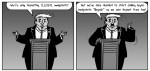
And the game had a 1950s advert style to it, kind of how Bendy and the Ink Machine is stylized
^ kind of like that
Anyway I’m calling it Desperate Housewife and if anyone wants to actually make that game gimme some credit lmao
Be More Chill:sing along to ALL the instrumentals.
The Book of Mormon: passionately yell the lines. Then glance out the window awkwardly to make sure no one’s listening. Then resume passionately yelling. Awkwardly go quiet when you hear people passing your door. Repeat.
Dear Evan Hansen: two modes: either humming the songs peacefully to yourself or jumping to your feet, perfectly executing the “Sincerely, Me” dance and also doing all of Ben Platt’s physical tics and waiting for your Tony.
Falsettos: *singing along happily for hundredth time* *abruptly stops* What does that line even mean
Hamilton: there is literally only one way to do it: singing along to all the parts at once and incorporating all the furniture in the room for maximum effect.
The Last Five Years: have a hundred tabs open with the lyrics. It would be one of the easiest musicals to sing along to alone if there weren’t so many goddamn words.
Les Misérables: reconcile yourself to the fact thatit’s physically impossible to sing along to all the parts. You gotta just pick a character to sing with. Which is actually fine, because most Les Mis fans have this one character that’s “their” character. And there’s probably only one character who’s in your range, anyway. I mean, you can try to sing along to all the parts, but prepare to get absolutely slaughtered in “One Day More.”
Newsies: whatever you do, just don’t try to dance along. Please.
Next to Normal: *singing along happily for hundredth time* *abruptly stops* Whoa. That line is really clever/weird/sad/beautiful.
The Phantom of the Opera: AHHHHH aaahhhh ahhhh ahhhHHHH SING MY ANGEL OF MUSIC AHHHH ahhhh ahhh hahhhHHHHH sing mY ANGEL ahhh hahhhhhhh ahhhhHHHHH SING FOR MEEEE AHHHHH HHHHHHHH HAHHHHH HHHHHH HHHHHHHHHHHHHHH SING MY ANGEL HHHHHHHH Ś̹̗̝̠̫I͓̻̰̲N̢̠͕G̦̬͟ ̲F̳̫̦̜̭̰O͙̹̪͕̞͉͟R̩̭̦ ̛̠͚̰M̫͍̬͇͈̖EE̖̙̬̳̞̞̹È̖E͈EE͏E̗̞̲͍̰̕E̗̙̬̻̭Ḛ̫͉̗̜ aaʰʰʰʰʰʰʰʰʰʰʰʰʰʰʰʰʰʰʰʰʰʰʰʰʰʰʰʰʰʰʰʰʰʰʰʰʰʰʰʰ
Rent: ALL the air guitar.
Spring Awakening: *forgets lyric* 🎶 lonely grass purple horses hay bale 🎶
Waitress: wait until “I Didn’t Plan It” and “She Used to Be Mine,” and then let out YEARS of pain and sadness
Had to include the screen-cap because otherwise I’d have a shit-ton of Trump supporters saying “this isn’t true” in my mentions. This IS true. This IS fucked up. And y’all should be TERRIFIED this is happening in our country.
Playing 5th edition for the first time and feeling overwhelmed? Here’s a quick glimpse into the classes.
Barbarian
Fundamentally: It’s like when you step on a Lego in the middle of the night and for a moment your capacity for rational thought is eclipsed by the fact that the entire world must tremble before the unfathomable depths of your wrath. Only with fewer Legos and more swords and stuff.
Mechanically: You can go into a rage in battle that diminishes the damage you take and increases the damage you deal. A lot of your fighting is based on high-risk, high-reward strategies, intimidation, and instinct rather than careful calculation.
Bard
Fundamentally: The words you speak change the shape of the minds around you. You’ve taken motivational speaking to a whole new level. You can also insult someone so hard they die from it.
Mechanically: Your day-to-day repertoire of spells stays the same (once you’ve learned a spell, it tends to stick in your head) and also pulls from a lot of different specializations. You can also inspire your allies, mess with your enemies’ morale, and, yes, insult someone so hard they die from it.
Cleric
Fundamentally: You’re pretty tight with some sort of higher power who’s granted you abilities commensurate with their sphere of influence. You might be a warm and fuzzy beacon of light and love, you might heal the sick, or you might make swarms of insects descend on your screaming foes. God stuff, you know?
Mechanically: You have access to a huge number of spells but don’t know them all off by heart, so every morning you spend some time in prayer and contemplation to make sure a few of them are ready at your fingertips when you need them most.
Druid
Fundamentally: You can turn into animals and control a lot of powerful magic that’s tied in with nature and the elements. You also may have read too many Animorphs books as a kid.
Mechanically: Much like clerics, you have a huge number of spells potentially at your disposal but have to concentrate each morning on picking out which ones you’ll pack with you. You can also, you know, turn into animals. That’s a thing.
Fighter
Fundamentally: You probably watch a lot of action movies and wince every time a character pulls off an amazing fight despite not having any experience or training. You’ve worked very hard to learn strategy, tactics, and precision, and when the stars align, the whole battlefield is yours to control.
Mechanically: Depending on your specialty, you’ll have a variety of abilities to make combat go a little more smoothly for you and your friends: taunting enemies so they focus on the right people, shielding your squishier allies, or just doling out an absurd amount of hurt.
Monk
Fundamentally: You think people get a little weird about their swords; you’ve never needed more than just your fists and maybe a good stick. You’re highly trained and absurdly dexterous: if someone tries to pull a coin out from behind your ear, they’ll probably find themselves with a rabbit in their hand instead and no idea what happened.
Mechanically: You’re so quick that you can snatch arrows out of mid-air. You’re also very centered on precise, devastating strikes, and have a store of ki points that allow you to do special attacks/defenses.
Paladin
Fundamentally: While clerics are generally a little more buddy-buddy or reverential with their divine patrons, yours is something more of an… employer. You know how it is when you’re on the clock: sometimes you gotta do your best to be the good you want to see in the world, and sometimes you gotta swear to enact vengeance for ancient wrongs. It’s a living.
Mechanically: Your singularly goal-oriented abilities are a blend between magic and more traditional combat, and you can frequently use magic spells to imbue weaponry with divine power. You also have an impressive ability to suss out both strong good and strong evil.
Ranger
Fundamentally: You know the wilderness pretty darn well (and probably complain about weekend hikers a lot). Your idea of a good time is being dropped in the woods without a map and having to puzzle your way out, preferably while hunting a few monstrosities along the way…
Mechanically: Your experience and survival instincts will serve you especially well in particular regions (a favored terrain you select) and against particular enemies (a favored type you select). You pick up a bit of magic here and there, mainly to help yourself and your friends make it through the wilderness unscathed.
Rogue
Fundamentally: You’re a very sneaky person who figures the best battle is the one that you ensure is over before it even gets a chance to start… mostly because you know if you get cornered you’ll probably get squashed like a bug. It’s probably a good thing that you’re so stealthy you practically vanish into another dimension.
Mechanically: You get huge bonuses and incentives for attacking first or when an opponent is distracted. You’re also notoriously quick-fingered and can be assured that if something ever goes missing, every eye in the room is going to be looking at you. Whoops.
Sorcerer
Fundamentally: You’ve got some powerful magical abilities that just sort of… happen, and your control over them is a little shaky at best. But it’s fine, it’s all good, you’ve got it handled. That tree was always on fire, right?
Mechanically: You learn a limited selection of powerful spells that are always at your disposal, and also gain access to a pool of Sorcery Points that will let you further manipulate your magic as you get more and more comfortable with your spellcasting.
Warlock
Fundamentally: Some incredibly shifty and absurdly powerful ancient being decided you seemed kind of neat, so they were all, “Hey, how would you like to have some seriously freaky magic in exchange for making a sorta dodgy pact with me?” and you were all, “alksdjflgk???” because hey, otherworldly and unfathomable, and they were all, “Cool, have fun,” and now you can kill things with your brain.
Mechanically: You have an extremely limited number of very powerful spells, but your spellcasting recharges very quickly, since the channel between you and the source of your magical abilities is pretty darn open. You also made a pact with something strange and a little bit unknowable. What could go wrong?
Wizard
Fundamentally: You’re the kind of person who got all A’s in school but also studied their ass off to do it. It’s like you read Harry Potter so many times that you managed to will magic into existence. You’re probably going to drag the party to every used bookstore on the planet.
Mechanically: You have a spellbook that contains every spell you know. Every day, you have to study up on a handful of these spells that you want to have immediately at your fingertips. You can add to the spellbook by finding more spells out in the world and copying them down using fancy-ass stationery.














 Motherfucking Cowboy Meowchow