Humankind cannot gain anything without first giving something in
return. To obtain, something of equal value must be lost. That is
alchemy’s first law of Equivalent Exchange.
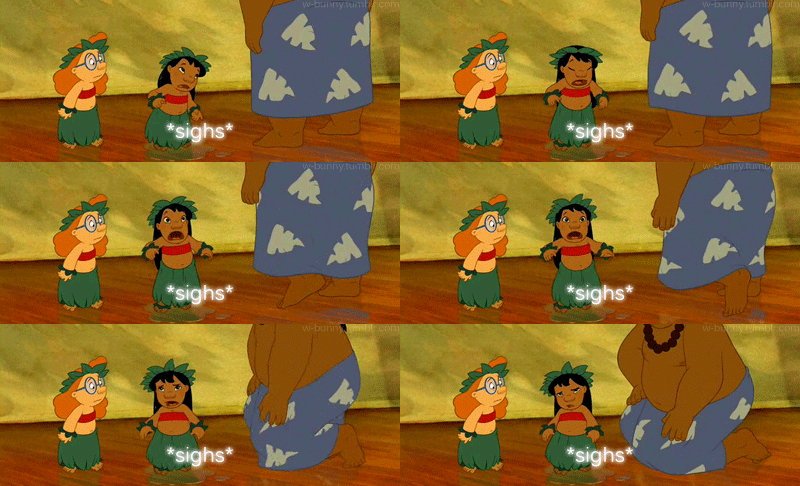
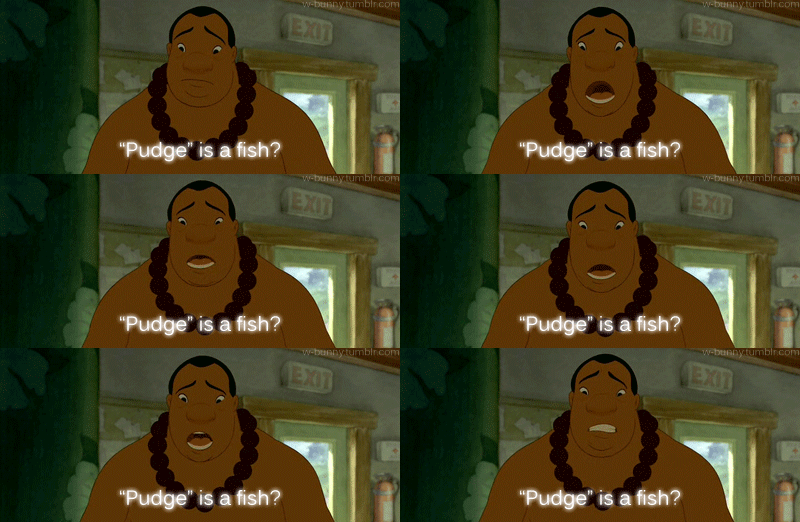
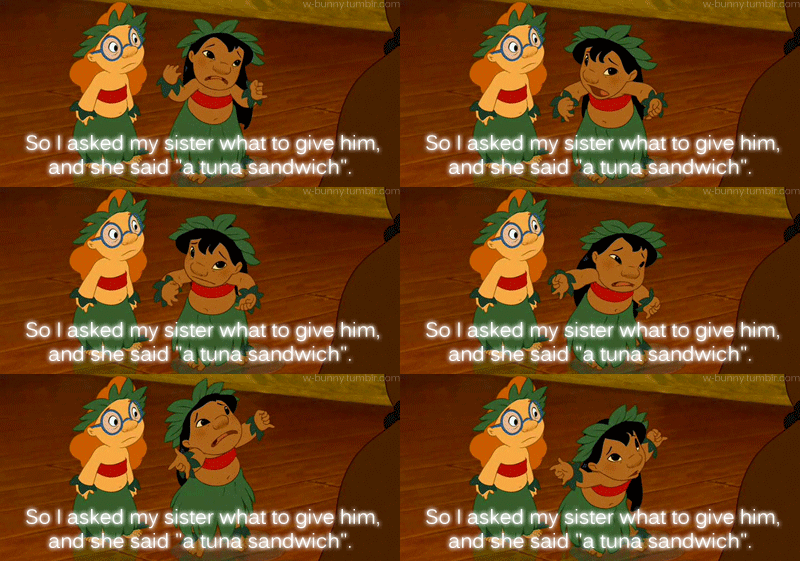
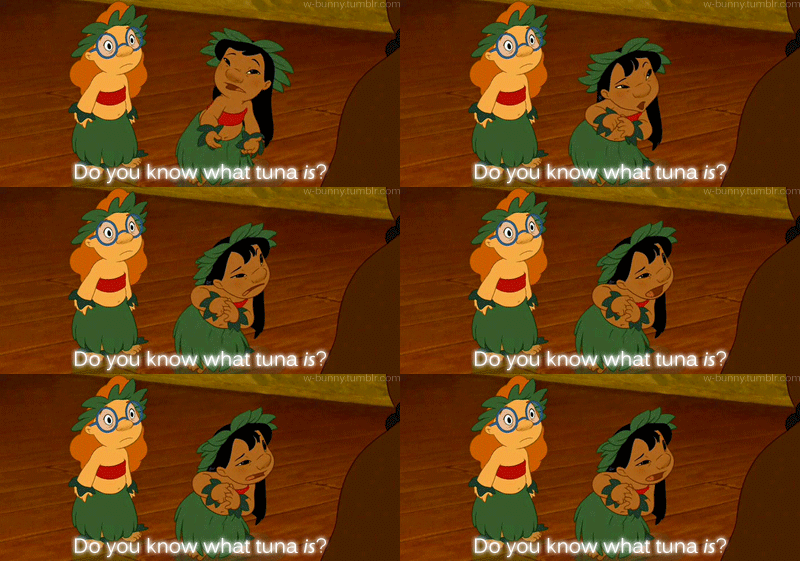
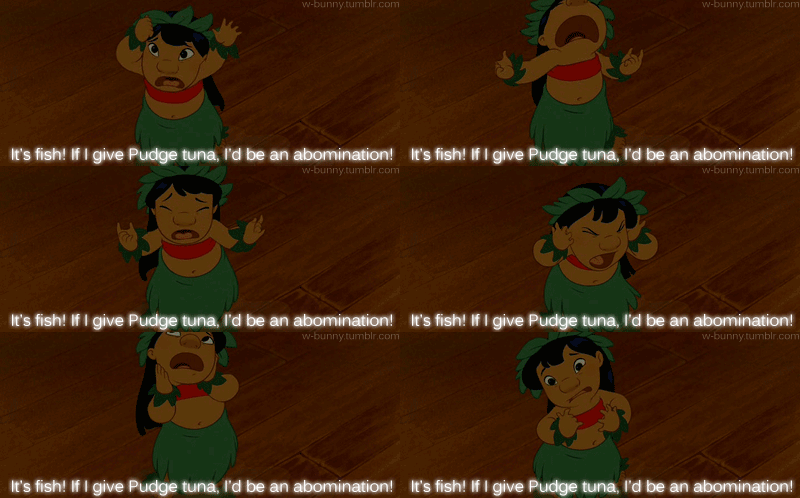
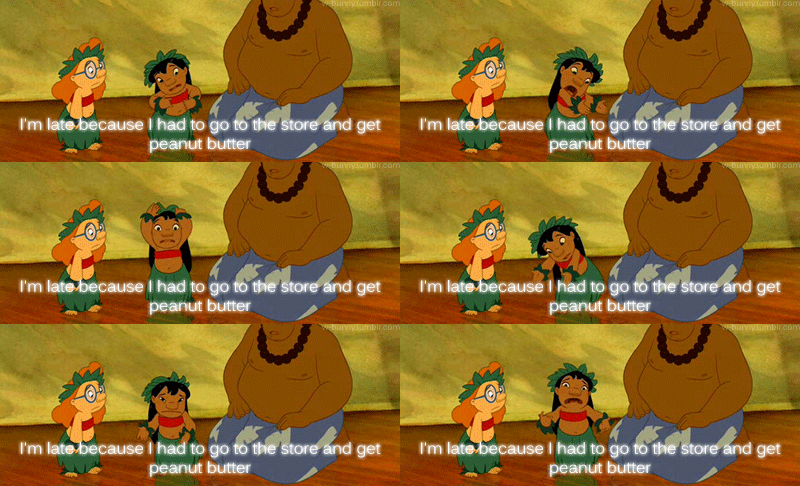
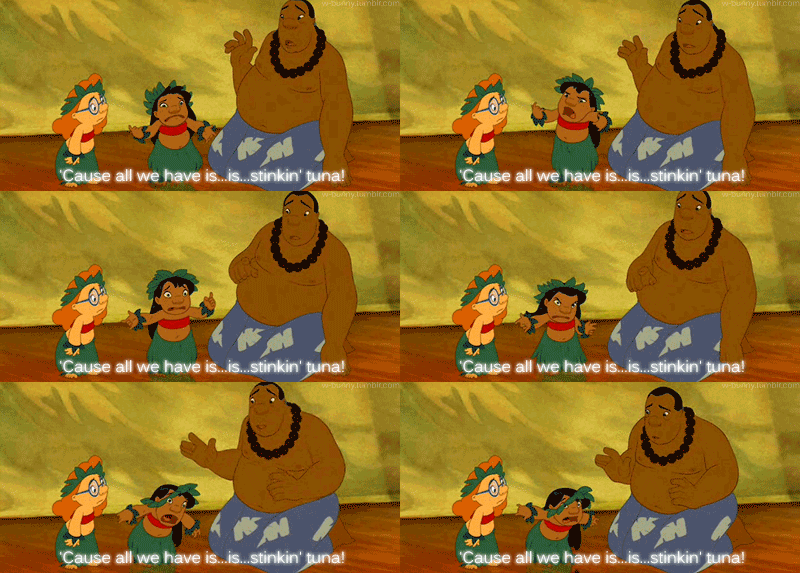
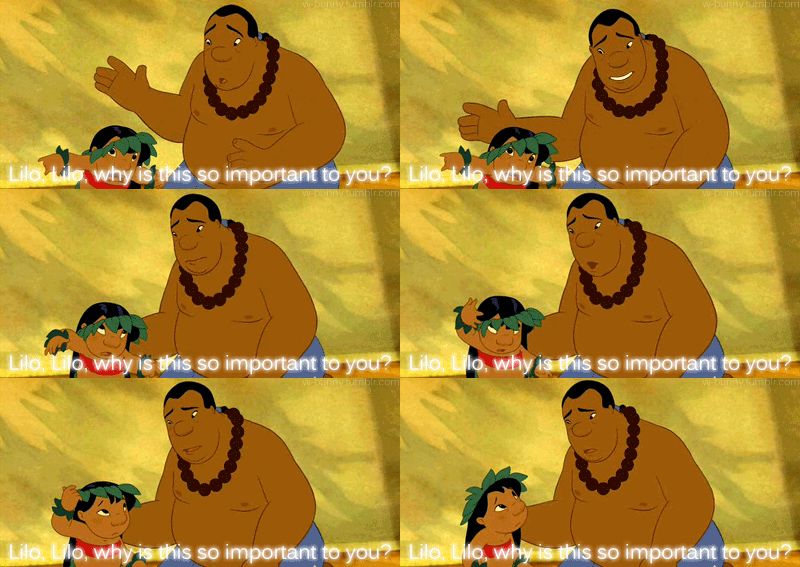
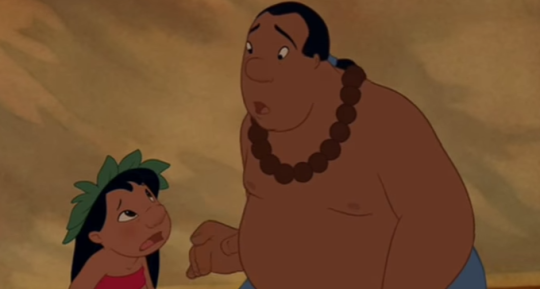
and now I’m wondering how in the hell Lilo came to the conclusion that there’s a peanut butter loving fish god who demands tribute or else he’ll murder your family.
When massive trauma hits, some people try to find any way to make sense of what seems senseless. Find any semblance of control, of responsibility.
Lilo may be blaming herself (unfairly) for her parents’ death. This was the only connection she could make, the only thing she could have had any control over, so to her it must have been her fault. If only she was a good girl. If only she did the right thing. Then maybe…
It’s very very hard to lose a mindset like that even when it’s the most irrational thing, even when it hurts you, because then you’re left with nothing.
And when you’re six your pattern recognition skills are a work in progress. Lilo sees that type of fish one day and as it swims away it starts to rain; connection made.
“Lilo may be blaming herself (unfairly) for her parents’ death. This was the only connection she could make, the only thing she could have had any control over, so to her it must have been her fault. If only she was a good girl. If only she did the right thing. Then maybe… “
This movie had some of the best scenes cut out of it.
This is one of my favourite movies yet somehow I never saw this deleted scene…. Excuse me a second…
This young girl uses “los,” “las” and the gender-neutral “les” — watch her explain why. —from REMEZCLA on twitter.
to all the cowards who whine “how will i explain it to my kids??” i say: how about you shut up and let your kids explain it to you.
Guys, you don’t understand, this isn’t the same thing as people complaining about “they” in English! This is a huge deal in Spanish. Spanish-speakers are much less forgiving of new colloquialisms or loan words from other languages (god forbid you say “slide” for a slideshow instead of “diapositiva”; you’ll get burned at the stake). To explain, I have to give a bit of background:
There is a very old organisation called LaReal Academia Española (the Spanish Royal Academy or RAE) whose sole job has been to maintain strict grammar and language rules for the entire Spanish-speaking world. Whenever someone is unsure of a word or rule, it is very common to consult la RAE, but it’s a much bigger deal than just Googling something on Dictionary.com or Webster’s in English-speaking countries. You know those old-people minion Facebook memes people like making fun of? There are some for RAE-approved grammar and language. I’m completely serious. I’ve had Spanish literature professors fucking email RAE officials when teaching some obscure grammar rule to make sure they’re up to date with RAE standards. I’ve had them scold students or dropping points for using a new or loan word in class because “it’s not RAE-recognised”. It’s the biggest deal.
Even if a word is widely understood and used, there are people who refuse to recognise it because “La RAE” doesn’t either. La RAE’s word is law for many Spanish-speakers, and it very rarely adds or changes words. They would never dream of adding “selfie” or “muggle” to the dictionary the way it has happened in English.
Spanish is a gendered language, so it’s hard to make things gender neutral without drastically changing centuries-old language rules. For example, the Spanish word for child is “niño” for masculine and “niña” for feminine. The correct gender-neutral way according to la RAE is “niño”, but lots of people use the “@“ symbol in the place of the gendered vowel to make it more inclusive, giving you “niñ@“. And RAE-thumpers get pissed about it. It’s impossible to make something widely recognised without RAE approval, which sucks because the people who manage RAE are a bunch of stubborn and elitist old people. To be fair, using “@“ is a bit cumbersome and only good for written works, and it’s always been a struggle to find a spoken gender-neutral equivalent. That’s where this sweet girl’s solution comes in.
Using a neutral vowel “e” instead of the gendered vowels “a” and “o” is an incredibly elegant solution to this problem! It’s easy to say and it’s easy to write. But for the average Spanish-speaker to accept “les” instead of “los” or “las” is a huge feat we’re undertaking. Standing up to her teacher, who most likely adheres to RAE rules and regulations, is a huge deal. These rules are centuries old and haven’t changed that much this whole time. What she’s suggesting is making a lot of people irrationally mad.
It’s not like in English where people whine about “they”, and yet you can pull up hundreds of examples of it in older literature. This has never been done in Spanish before. And it’s gonna take a lot more work to make this a thing in such a tightly-regulated language as Spanish.
One of the early pages of Y’gathok’s “adventure guide.” This is what you can expect to be coming along with the beast’s stats, as it will be giving you how to set up your world as well. Again, this is meant to set up for a 20+ campaign, but will give you good sets of character templates to use as build up for such, such as Cultists of the Hunger. There’s a lot more to come, I promise.
































 Motherfucking Cowboy Meowchow